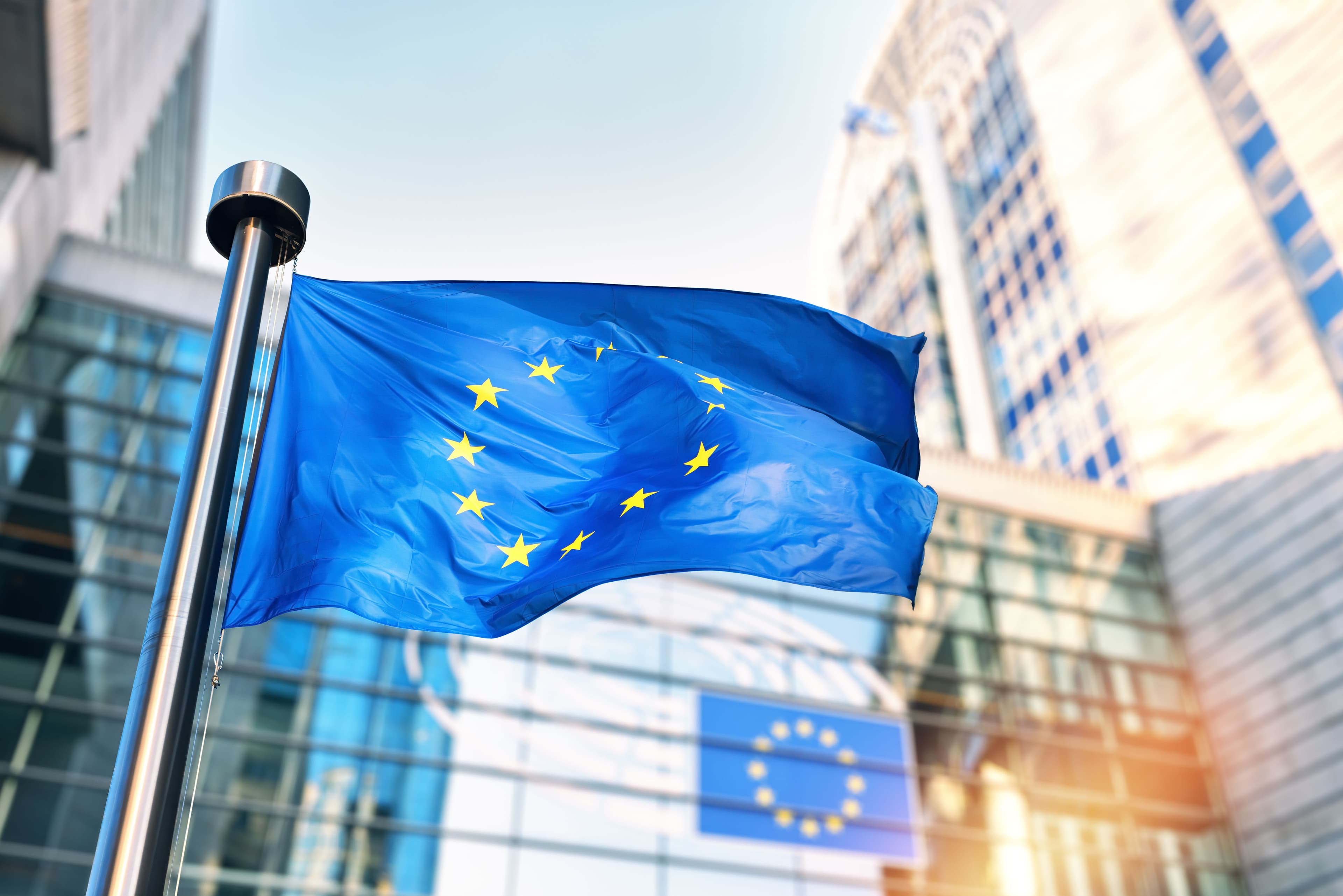
Saudi Arabia is fast becoming a popular destination for global businesses, including European companies.
With almost $1 trillion in assets under management, Saudi Arabia stands out as a compelling destination for European firms seeking to expand their reach and tap into new markets.
The country has a lot to offer thanks to the Kingdom's ongoing efforts to strengthen cross-border collaborations and attract foreign investment. These efforts include sweeping regulatory reforms to ease business operations, such as simplifying licensing procedures, improving transparency, and offering tax incentives.
As a result, more and more European companies are finding that expanding into Saudi Arabia allows them to not only access a growing domestic market but also leverage the Kingdom’s geographical position for further expansion across the region.
This article explores potential opportunities for European companies across various sectors in Saudi Arabia.
Germany
Saudi Arabia remains one of the most attractive hubs for German firms and investors, with many increasingly eyeing Riyadh as the prime location for their regional headquarters (RHQs).
Several major German companies have already committed to this move. Leading healthcare and medical device company B.Braun announced the establishment of its RHQ in Riyadh, joining Wilo Group, a global leader in pump systems, and TÜV Rheinland, a leading provider of testing and inspection services. These companies pursued RHQ status to strengthen their market position, secure government contracts, and access generous incentives.
At the diplomatic level, Germany's Ambassador to Saudi Arabia confirmed that bilateral trade volume has reached around 7 billion euros, with chemicals, machinery, and transport as the primary drivers. Germany is also eyeing a role in Expo 2030, with the ambassador describing the event as an opportunity to showcase what both countries have to offer and deepen long-term partnership.
Saudi Arabia's diversification push and industrial localization strategy have served as a key draw for German investors.
Siemens Energy secured a $1.6 billion contract in March 2025 to supply gas-fired power technology for new plants in Saudi Arabia's western and central regions. German electrolyzer manufacturer Thyssenkrupp Nucera remains one of the key technology contributors to the 2.2 GW NEOM green hydrogen and ammonia project.
BMW has been expanding its service network across the Kingdom and was recently licensed as the technology provider for Ceer, Saudi Arabia's first electric vehicle brand.
France
French investment in Saudi Arabia soared 180%.
France has emerged as a significant economic player in Saudi Arabia, with a growing number of French companies establishing operations and contributing to the Kingdom's development.
Over 160 French companies currently operate in Saudi Arabia, creating more than 13,500 jobs, and the ratio of French firms in the Kingdom has grown by 43% since 2020. Up to 30 French firms have successfully established RHQs in Saudi Arabia. Notable names include Air Liquide, Airbus, Alstom, Crédit Agricole, L'Oréal, Thales, TotalEnergies, and Veolia.
Renewable energy is a leading area of French activity. TotalEnergies recently secured a contract to build a 0.3 GW solar park in Rabigh Industrial City. EDF Renewables, in partnership with China's State Power Investment Corporation, is developing two additional solar parks totaling 1.4 GW — all aligned with Saudi Arabia's target of reaching 130 GW of renewable energy capacity by 2030.
In a recent statement, the French ambassador to Saudi Arabia noted that many French companies have relocated their regional headquarters to Riyadh to capitalize on the opportunities presented by the Saudi market.
Aviation is an emerging frontier. Investment opportunities worth more than SR10 billion ($2.6 billion) were presented at a high-level Saudi-French roundtable on the sidelines of the 55th Paris Air Show.
Airport infrastructure, air navigation, and advanced technologies were among the areas flagged for investment. Agreements signed at the event covered ground support capabilities, technology localization, and workforce training. More than 65 Saudi and French public and private sector entities participated, chaired by the president of the General Authority of Civil Aviation (GACA).
Construction is another area where French firms are making significant strides. Hoffmann Green Cement Technologies signed a 22-year exclusive licensing agreement with Shurfah Group in 2024, supporting the Kingdom's construction decarbonization goals.
The broader bilateral relationship has also strengthened. Non-oil trade between Saudi Arabia and France exceeded SR20 billion ($5.33 billion) in 2024. A Strategic Partnership Council was established following President Macron's December 2024 visit, and up to 100 French companies are now targeting Expo 2030 and FIFA World Cup 2034 project opportunities across infrastructure, transportation, and engineering.
One area where French companies have made particularly notable strides is healthcare. Unanime, a French architecture firm, has expanded its operations in Saudi Arabia with a focus on designing medical infrastructure, while a joint venture between Saudi Arabia's SmartHealth and France's Visiomed will establish 40 healthcare centers across the Kingdom.
Italy
Saudi Arabia and Italy have significantly intensified their bilateral relationship in recent years, with activity spanning energy, infrastructure, finance, and luxury sectors.
Italy's state insurance and financial group SACE signed an MoU with the Public Investment Fund (PIF) to accelerate cooperation, providing up to $3 billion in financing support for PIF-led projects and portfolio companies. This partnership is expected to act as a catalyst for drawing more Italian investors to Saudi Arabia.
Separately, SACE had previously provided a $3 billion loan guarantee to support the NEOM megacity project.
The energy sector is a key area of interest. A strategic collaboration between ACWA Power and Italy's A2A is advancing green hydrogen development in the Kingdom and globally. Italy's Saipem was awarded a $500 million offshore contract by Saudi Aramco, further cementing Italian engineering capabilities in Saudi Arabia's energy sector.
Infrastructure and transport represent another strong thread. Saudi Arabia is set to host its first Italian ultra-luxury train under a $78 million financing package. Construction giant WeBuild (formerly Salini Impregilo) continues to win contracts for major NEOM infrastructure developments, including a 57-kilometer railway connecting Oxagon and The Line.
In addition, the industrial partnership between Continuus-Properzi and Bahra Electric to localize aluminum and copper rod manufacturing within the Kingdom also continues to strengthen local supply chains.
Spain
The number of licensed Spanish companies in Saudi Arabia has doubled to 245 in just three years.
Spanish engineering firms are also winning significant mandates. SENER was awarded the design contract for the Saudi Land Bridge rail project. Engineering firm Ayesa secured a €95 million project in Saudi Arabia. Spanish firms are also among the 145 companies that submitted expressions of interest for the Qiddiya High Speed Rail PPP.
Saudi Arabia's major upcoming projects—including Expo 2030 and the 2034 FIFA World Cup—represent multibillion-dollar opportunities for Spanish firms in construction, transport, and sports infrastructure. Spain's Minister of Economy described Saudi Arabia as the country's most strategic partner in the region, and the bilateral goal is for each country to rank among the other's top 10 trading partners.
A standout example of Saudi-Spanish cooperation remains the partnership between Saudi Arabia's National Housing Co. and Spain's Urbas Middle East Real Estate Co., which will develop nearly 600 housing units in the Al-Fursan suburb.
How European Companies Can Set Up in Saudi Arabia
For European companies ready to act now, here is a practical overview of what company formation in Saudi Arabia involves—including the steps, documents, timeline, and costs.
The 3-Stage Setup Roadmap
Business setup for foreign companies in Saudi Arabia follows a three-phase process spanning three to six months.
Stage 1: Legal Entity Foundation (~1 month) This stage establishes your company as a recognized legal entity in Saudi Arabia's commercial registry. It covers obtaining a MISA investor license, reserving a company name, drafting local Articles of Association (AoA), securing a Commercial Registration (CR), and obtaining Chamber of Commerce registration.
Stage 2: Operational Authorization (~2 months) This stage enables hiring and tax compliance. It includes obtaining a company seal, registering with the Ministry of Labor and GOSI, registering a national address, issuing a GM visa, and registering with ZATCA (the General Authority of Zakat and Tax).
Stage 3: Full Operational Readiness (~3 months) The final stage completes residency formalities and activates banking. Steps include activating the Chamber of Commerce account, obtaining health insurance, completing the GM's medical check-up, issuing the GM's Iqama, and registering on Muqeem, Absher, Qiwa, and Mudad portals. The stage concludes with opening a corporate bank account.
Documents Required to Get Started
For established businesses:
- Commercial Registration, attested by the Ministry of Foreign Affairs (MOFA) and the Saudi Embassy
- Memorandum of Association (MoA) and Articles of Association (AoA), attested by MOFA and the Saudi Embassy
- Audited financial statement
For startups:
- Commercial Registration, attested by MOFA and the Saudi Embassy
- MoA and AoA, attested by MOFA and the Saudi Embassy
- Letter of intent, startup brief, and pitch deck
- Support letter from a VC firm or licensed incubator
What Does It Cost to Set Up a European Firm in Saudi Arabia?
First-year business setup costs in Saudi Arabia are typically around SR550,000 ($146,700), depending on industry and operational scope. Here is how that breaks down:
- Incorporation (via third-party service provider): SR150,000 ($40,000)
- Hiring (GM + one Saudi national): SR375,000 ($100,000)
- Workspace (shared office, entry-level): SR20,000 ($5,000)
- Compliance and renewals: SR75,000 ($20,000)
- Third-party services (payroll, accounting, PRO): SR25,000 ($6,900)
On the tax side, foreign companies are subject to 20% corporate income tax on net adjusted profit, 15% VAT, and withholding taxes ranging from 5% to 20% depending on the business activity.
What to Do After Incorporating a European Company in Saudi Arabia
Successfully incorporating a company is only the first step. Within the first year of operations, European companies must address several ongoing compliance requirements:
- Meet the Saudization (Nitaqat) quota by hiring Saudi nationals based on company size and sector—failure to comply risks being placed in the Red Zone, which can trigger operational disruptions and legal penalties.
- Keep accounts active and up to date on Qiwa, Mudad, and Muqeem.
- File annual tax returns with ZATCA within stipulated timelines.
- Maintain payroll compliance for all employees.
- Initiate license renewals—including the MISA license, Commercial Registration, and GM Iqama—in the 11th month of each operational year. Build this into financial planning from the outset.
Related reads
Understanding Harmonization When Setting Up a Business in Saudi Arabia
Mudad, Muqeem, Qiwa: Next Steps After Setting Up in Saudi For Foreign Business
MISA License Renewal: Requirements and Consequences Explained