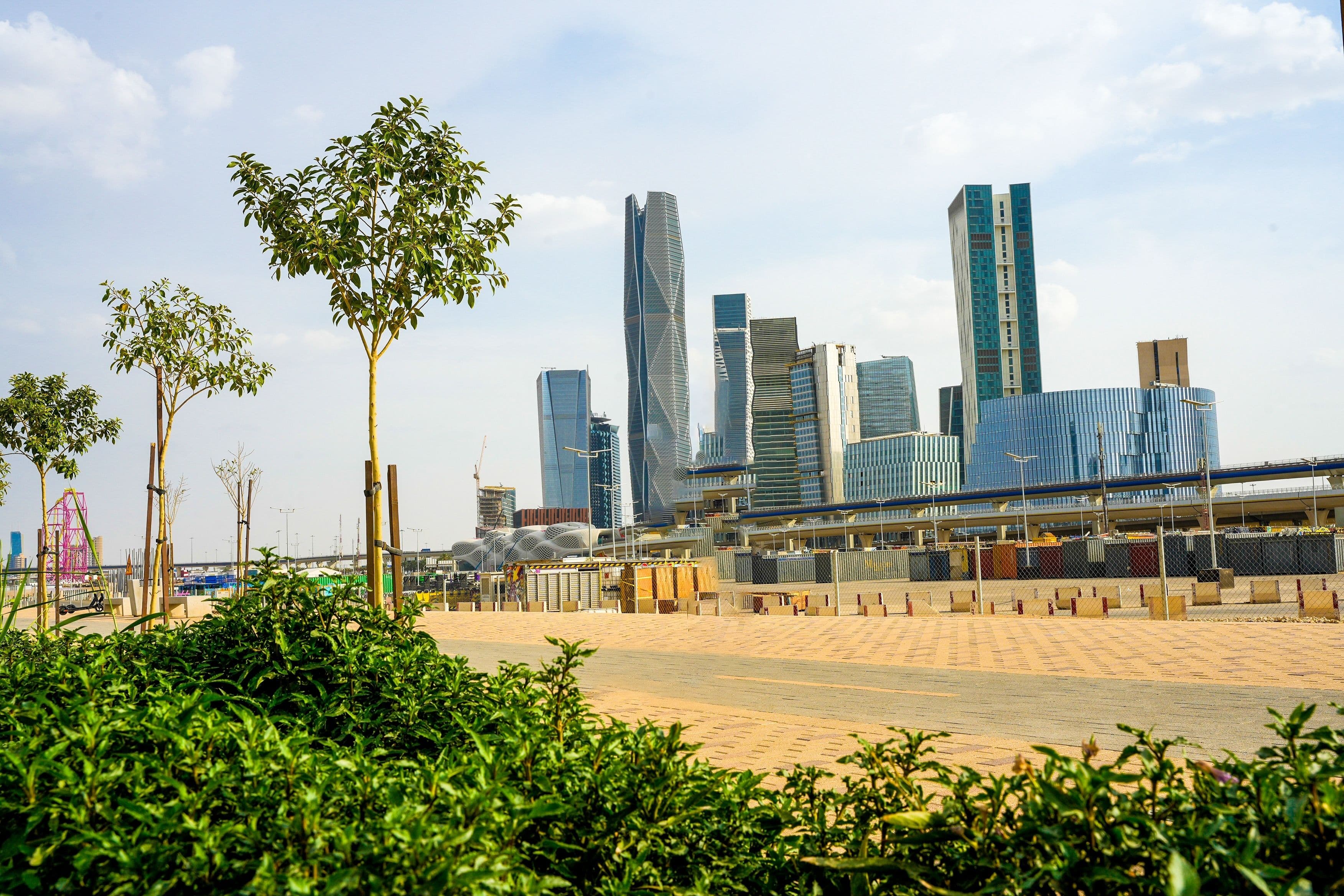
Saudi Arabia's Path to Net Zero: Opportunities for International Enterprises
Explore how Saudi Arabia's net zero strategy is creating business opportunities in renewable energy, green construction, climate resilience, and environmental services.
Saudi Arabia's commitment to achieving net zero emissions by 2060 is reshaping investment priorities across energy, construction, manufacturing, urban development, and environmental services.
Foreign companies planning to set up a business in Saudi Arabia are also better positioned to participate in government tenders, build partnerships with public entities, and contribute to the Kingdom's growing domestic supply chains.
As Saudi accelerates its transition, early market entrants stand to benefit from a pipeline of projects expected to expand throughout the coming decade.
Energy-Efficient Building Retrofits Accelerate Across Saudi Arabia
The Kingdom’s existing building stock represents one of the country's largest decarbonization opportunities.
According to sustainability consultancy Cundall, more than 70% of Saudi commercial and residential buildings were constructed before modern energy-efficiency standards were introduced. This creates significant demand for HVAC upgrades, insulation, smart building systems, efficient lighting, and energy management technologies.
Government initiatives, including the Energy Conservation Building Code and the Mostadam Rating System, are encouraging owners to improve existing assets while raising expectations among tenants, investors, and occupiers for higher-performing buildings.
Increasingly, the focus is shifting from building new infrastructure to optimizing existing assets, retrofitting buildings, modernizing the power grid, expanding renewable energy, deploying climate-resilient urban solutions, and restoring natural ecosystems.
Large-Scale Renewable Energy Deployment Gains Momentum in Saudi Arabia
Saudi is rapidly expanding its renewable energy market, targeting 50% of electricity generation from renewable sources by 2030 and up to 130 GW of installed renewable capacity.
Backed by Vision 2030 initiatives such as the Saudi Green Initiative, these ambitions are translating into one of the world's fastest-growing clean energy project pipelines.
The Kingdom already plans to award approximately 14 GW of new renewable energy capacity in 2026 through the National Renewable Energy Program (NREP), including utility-scale solar and wind projects under the Saudi Power Procurement Company's (SPPC) Round 7 tenders.
At the same time, the government continues to invest heavily in transmission infrastructure, substations, and grid modernization to accommodate growing renewable generation.
The supporting infrastructure is expanding just as quickly. Installed grid-connected renewable energy capacity has reached 12.3 GW and is expected to approach 20 GW by the end of 2026. Battery Energy Storage Systems (BESS) connected to the national grid currently total 8 GWh, with capacity expected to increase to 22 GWh over the same period.
Saudi Energy has also recently commissioned the world's largest grid-side, grid-forming battery energy storage project, with 2.5 GW of installed capacity across five strategic locations, reinforcing the Kingdom's commitment to grid resilience as renewable deployment accelerates.
Saudi Arabia Expands Land Restoration and Climate Adaptation Projects
Through the Saudi Green Initiative, the Kingdom has restored its first one million hectares of degraded land and planted more than 159 million trees, marking a significant milestone toward its target of rehabilitating 40 million hectares and planting 10 billion trees.
Beyond its environmental objectives, the initiative is creating new commercial opportunities in consulting, biodiversity management, native plant production, nursery operations, ecological monitoring, GIS and remote sensing, and ecosystem restoration services.
In parallel with large-scale restoration projects, Saudi is investing in environmental technologies that improve climate resilience.
The National Cloud Seeding Program has helped increase rainfall while contributing to a 50% reduction in dust storms in 2025 compared with the previous year.
Climate adaptation is already shaping urban development. As cities become more resilient to rising temperatures, new demand is emerging for urban cooling technologies, climate-responsive design, and heat mitigation solutions.
The Royal Commission for Riyadh City recently appointed Greek consultancy PLANET S.A. as the lead consultant for the Cooling Riyadh Project, a flagship initiative under the Green Riyadh Program.
The project is expected to evaluate a range of climate-responsive interventions, including reflective and cool building materials, cool pavements, expanded green spaces, water features, and urban design strategies to mitigate the urban heat island effect.
Once validated, these solutions could be deployed more broadly across Riyadh and serve as a model for other cities facing rising temperatures.
Looking to establish your footprint in Saudi Arabia? Contact our team to accelerate your market entry and growth.